A photographic limbo is not a pleasant place to be, concludes Ed Alcock, but sometimes it is necessary, especially if the material you’re dealing with is highly personal and has the potential to irrevocably change lives, and not necessarily for the better.
When we speak, ahead of Alcock’s forthcoming group show Paris to Peckham: MYOP in London, which will take place during Photo London, the photographer reflects pensively on the new body of work he will be showing. Titled The Wait, it is, like a lot of Alcock’s work, personal in subject matter, drawing on his relationship with and feelings towards his family and own life.
Alcock began the series after he was forced to put another body of work, which delves into his family’s past, on hold. Highly sensitive in nature, Love Lane is a no-go for discussion, he stresses, at least until Alcock gets the go-ahead – or not – from his family to continue with it.
And so the Paris-based British photographer found himself at a loose end, eager to channel his energies into a new personal project. The Wait – a dreamlike series that ruminates on personal memory, a sense of belonging (or not belonging), and familial ties, fills the void nicely, although I sense he is itching to continue with his paused project. For now, though, Alcock seems happy enough to talk about the genesis and thinking behind the interim body of work.
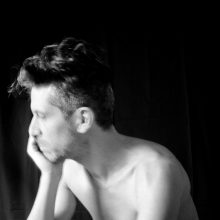
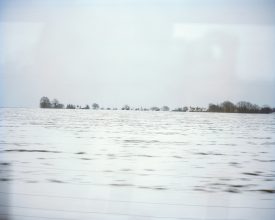
Shot mainly in France – in Burgundy and St Etienne – between 2014 and 2015, (with one or two images sourced from his archive), The Wait features a mix of colour and black and white images of atmospheric landscapes, candid portraits and even a self-portrait, made with a long exposure. The work exists as its own entity, says Alcock, but is a continuation of Love Lane in the way it came about. “I don’t want to talk about the stories behind Love Lane as it’s not finished, but when I showed what I’d done so far to my extended family, they were a little taken aback that I was talking about our lives, [albeit] indirectly and not using a documentary approach. That set a whole new dynamic into motion, and opened up discussions in my family about some of those stories.
“So in January of this year (2015), I was a little stuck. Because Love Lane posed questions that are not yet answered, I found myself having to wait in order to proceed with that work. This was interesting and frustrating, both on a personal and professional level, because I wasn’t able to show the work to anyone. This new series is my reaction to that situation. I’m waiting for my family to make personal decisions, but I have no idea what those decisions will be or whether they will ever take those decisions. So I’m waiting, slightly frustrated and slightly anxious, about what may happen. The images in The Wait are a rather introspective response, trying to portray, through photography, how I’m feeling right now.”
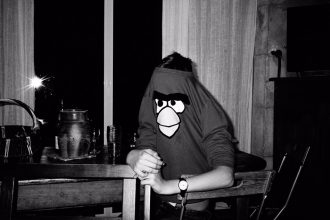
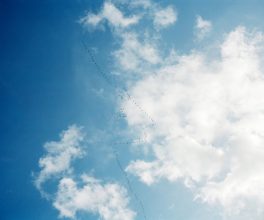
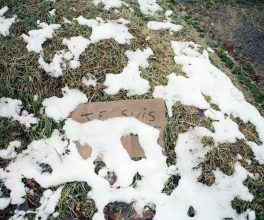
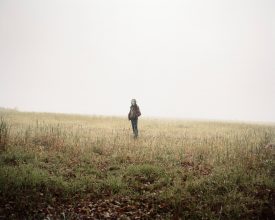
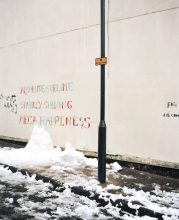
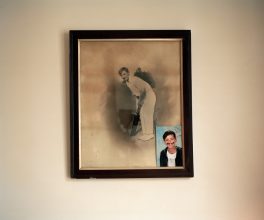
One of the images of a boy in a mask, who is standing in a field, came from a dream, Alcock explains, and provided the starting point for the project. “Is it me, am I the little boy?” he asks. “Or am I the father and this is my son who is waiting for me to arrive? Or am I just a spectator looking on? Whoever the boy is, I know he is waiting for his father – a father who never appears… I know this because it was in my dream.” The other images respond to the theme of waiting, he says. An image of a boy whose face is hidden by a jumper, a semi-obscured sign with the words ‘je suis’ just visible, and a cluster of flying geese that could resemble a face “riff on the idea of hidden identity, perhaps a sense of waiting for something to be revealed, but which is slightly beyond my reach in the present moment, as dreams are,” he says. “There is a nice parallel between this and photography in that you sometimes make pictures quite unconsciously,” he adds. “You see something and you photograph it, but you haven’t always asked yourself why. Then of course, what’s interesting is what happens when you put the work in front of someone else – they may tell their own stories about the work. So I quite like to leave my work open in that way, and to play with what the viewer may think about it.”
– text by Gemma Padley
__________
For further viewing:
Paris to Peckham: MYOP in London is organised by Seen Fifteen Gallery and features the work of fifteen photographers from the Paris-based MYOP collective. The exhibition runs from 21 to 24 May. Opening Party: Thursday 21 May, 6pm to 10pm, at Safehouse 1 and Safehouse 2, 137-139 Copeland Road, Peckham, London, SE15 3SN.