
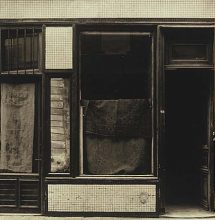
John Goto is a photo-digital artist. He studied painting at St. Martin’s School of Art, and photography in both Paris and Prague. He regularly taught at the Polytechnic of Central London, The Ruskin School of Drawing and the University of Derby, where he was Professor of Fine Art. Goto has staged solo London exhibitions at The National Portrait Gallery, The Photographers’ Gallery and Tate Britain, and has exhibited widely internationally. Below, Christiane Monarchi asks Goto about the background to his Lovers’ Rock and Belleville series from 1977, images from which will be exhibited at Art Jericho in Oxford this month to coincide with the publication of his book about Lovers’ Rock by Autograph ABP, London.
———-
Christiane Monarchi: The works on show from your Lovers’ Rock series encapsulate a particular time and place almost 4 decades ago in Lewisham, and I am interested to know how you have decided to show this series for the first time, now, in 2013. How does it feel looking back at these portraits today?
John Goto: It feels rather strange, almost like looking at works made by someone else. But even when I make new work, it can feel like that. Why is it? Well if I fully understand a picture I’ve made, I’m likely to discount it as too slight. Good artworks can be returned to time and again, and their meanings are never exhausted or fully grasped. Ideas, intensions and research all have a place in making art, but it is from dialogue with the image that the unconscious comes into play, that rich and troubling domain where meanings shift, constantly reconfiguring and replenishing themselves.
But this momentary dissociation, this standing back, does not absolve the artist from responsibility for their creations. So returning to the Lovers’ Rock portraits after so long a time lapse was demanding. The central question was how to contextualize and present this material in a manner that both acknowledged cultural, technological and social changes in the interim period, and conferred appropriate meanings on the original images.
I hadn’t held back from showing this work for philosophical or strategic reasons, it was simply due to a lack of art venues and an audience interested in the community of young British Afro-Caribbeans I’d photographed. Sure, there were documentary photographs in the newspapers of black youths protesting or confronting police lines, and photographs of Carnival, but nothing like I’d made which came not out of a social documentary tradition, but a fine art one.
I was fortunate in meeting Mark Sealy, Director of Autograph ABP, with whom I’ve had a three-year dialogue about this work resulting in the Lovers’ Rock book, which has just been published. There are a number of ways in which we carefully contextualised the images, the most important of which are essays by the distinguished cultural historians Professors Paul Gilroy and Lola Young, Baroness of Hornsey, which offer socio-political and personal perspectives on the black experience in London in 1977.
CM: I am interested to learn more about how this project started out. In 1977 when you were making Lovers’ Rock were these portraits intended to be kept within the community of the Lewisham youth group you photographed, or had you considered this project as an artistic one at the time, to be revisited at a later time?
JG: The series grew out of my daily life. I wasn’t parachuted into the context by a commissioning agency, rather I was a hard-up young artist who taught photography evening classes for two years at a local youth centre, to help supplement my income and support my family. But I also really enjoyed the work. The young people were a mixed group of working-class kids and the lessons informal and improvisational. We had a few East German Praktica cameras and a small darkroom in a store cupboard. I soon realised the best way to engage the students was to follow their interests, which were mostly in photographing each other. The common ground between us became portraiture, which interested me too, although I hadn’t had much experience with the genre.
On Friday evenings there were occasional dances. Huge sound systems were brought in and I remember the physical impact of the baselines vibrating through the floor. Most of the attendees were regular members of the youth centre, though not all. In early ’77 my life was about to change as I’d been offered a British Council scholarship to study photography in Paris, and this motivated me to try and resolve these pictures before I left. I set up a makeshift studio in a room adjacent to the dancehall where I photographed the young people, readied for their evening out. So the motivation wasn’t for posterity, career or money, it was because I thought it the artist’s job to tell of their time, as best they could, and this was a part of my time.
CM: In bringing together your works from Lewisham and Belleville for this exhibition, you have let the viewer begin to understand the early workings of your artistic practice. If I would venture a trajectory, I think your work in Paris of 1977 would better predict future series in your career interested in narrative of our surroundings and found objects, with less evidence of an interest in continuing in portraits. Would you consider turning again to portraiture in future, and if so, would there be a group of community you would be interested in working with?
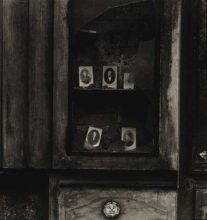
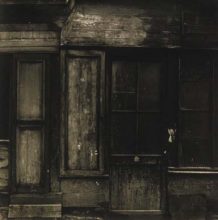
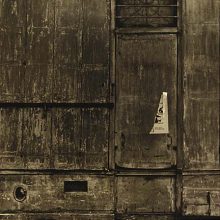
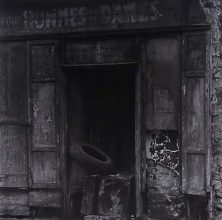
JG: Well I have to say that I too am looking forward to seeing how these two cycles work together! The Belleville series was fully realised in the late Seventies and was shown as part of my first solo exhibition held and the Photographers’ Gallery, London, and subsequently toured to Czechoslovakia and Spain. But the Lovers’ Rock pictures haven’t been shown before, and I’m wondering how the two will relate.
Looking back I think these works came at the tail end of photography’s ‘age of innocence’. It was just possible then to maintain the integrity of the single perspective, unified photograph, and assume a degree of naturalism. There was a small but significant audience prepared to contemplate images over time, in the esoteric environment of the gallery. It was a mindset quite alien to how images are viewed today. Entering an art gallery was more like stepping into a church than today’s ‘fun palace’.
Even then, however, the cracks were showing in my work. In Paris I began to set up elements in front of the camera, and the Lewisham portraits refer in some ways to the Dutch paintings I saw in the National Gallery – where incidentally I gained most of my photographic education, along with the Academy cinema in Oxford St. Within a few years my photographs were literally fragmenting, and as you point out their sense of historical narrative became more intense.
With regard to portraiture you are right, increasingly I considered the people who appeared in my pictures as actors on a stage of my construction. I did make some large-scale figure groups for the National Portrait Gallery (1999), which interestingly offered all the compositional challenges once faced by history painters. But I have continued to use friends, acquaintances and family as models, and even cast myself as the grizzly ringmaster in my New World Circus series!
CM: I have enjoyed reading text and published essays on your site, and in particular, one caught my eye in relation to this exhibition, your essay published on Next Level and Eyemazing in 2005 about the compelling future of photography enjoying the fruits of digital technology http://www.johngoto.org.uk/essays/Digital.htm
JG: I started using digital technology and Photoshop in the early Nineties. In the article you refer to I comment on the ‘instability’ of the digital image, which I liken to the photograph becoming ‘un-fixed’, its elements fugitive, transmutable and migrant. This certainly undermines photography’s claims to objectivity and evidential value. I tested the chameleon qualities of the digital image, exploring its lack of ‘authenticity’ and ‘essence’, and its proximity to the counterfeit and fake in my Framer’s Collection and Gilt City works. The archive became a source of active imagery as historical pictures were reconfigured, and the relationship between past and present re-negotiated by means of the new media. I explored parallels between the methods of construction invited by digital software, and those of traditional narrative painting and theatre design. Hybridity became a concern as I tested the boundaries that separate traditional artforms and their discourses, in the digital environment. More recently I’ve collaborated on works that utilize Augmented Reality technology.
It does seem to me that photography, whether in the art world or in education, is suffering from its inability to convincingly address this new environment. To put it frankly, most photographers carry on as if nothing much has changed, taking the same kind of photos they always did, and encouraging their students to follow suit. This slow footedness is not without a cost. Fifteen or twenty years ago photography was the hip medium with numerous exhibitions mounted by major contemporary galleries. Now, as confidence has diminished concerning the nature and status of the medium, there is a retreat into the certainties of early photography. In a world where everyone takes photographs, all the time, a new credible rationale for the academic study of photography is urgently needed. For some years now photographic courses have found it difficult to justify themselves to all but the most inward looking circles. Indeed, it might be that ‘photography’ itself will become a redundant term as new social and technological hybrids emerge.
CM: Undoubtedly your vintage prints from Paris in 1977 embody different physical qualities (not even broaching the topic of their ‘auratic’ properties) than your most recent series created and printed digitally; do you think you may like to work with analogue processes again in future? If you were to go to Lewisham and Belleville today, where would your camera be aimed, and what kind of imagery would interest you?
JG: When returning to the Lovers’ Rock negatives I felt quite strongly that they should not be printed using analogue materials. The prints had to mark the passage of time between their making and realisation, and the development of digital technology was a landmark event during this period. Furthermore, inkjet printing is closer to the printmaking techniques I aimed for even in my analogue days. I disliked the hard impenetrable surface of photographs and used all kinds of odd papers and toners to make the prints more tactile.
‘Where would my camera be aimed today?’ Well at present I feel there are enough photographs in the world, and I don’t particularly want to add to the mountain. The lastest series I’ve made, Kafka in America, reworks old photographs of New York as Kafka imagined it. I am now embarking on a new cycle about Louis-Ferdinand Céline’s London, using similar types of source material. In a sense I am returning to Lewisham and Belleville today by rethinking my own early photographs. It’s enough really.
———-
John Goto’s Lovers’ Rock, published by Autograph ABP in November 2013, is available from their online bookshop. All images shown here are from “Lovers’ Rock” or “Belleville”, 1977 © John Goto
1977: Lewisham and Belleville, Photographs by John Goto is showing at Art Jericho, King Street, Oxford OX2 6DF, 22 November – 21 December. Gallery hours: Wednesday – Saturday 11.00 – 17.00, Sunday 13.00 – 17.00
Dominique Fiat Galerie, Paris; Galeria f5.6, Munich and Gallery On, Seoul, represent John Goto’s work.
John Goto’s website can be found here www.johngoto.org.uk