






Artist’s Statement
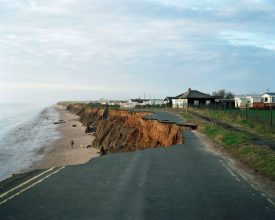
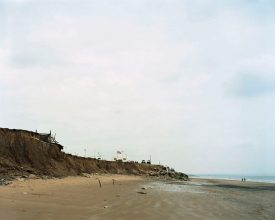
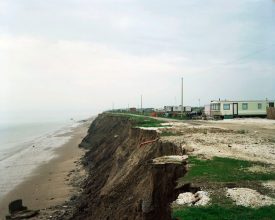
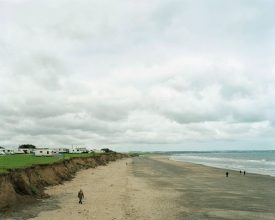
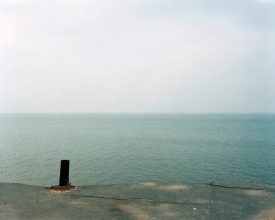
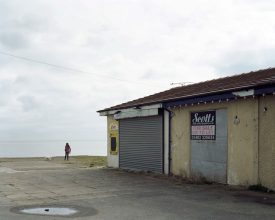
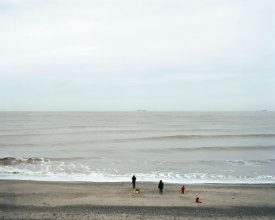
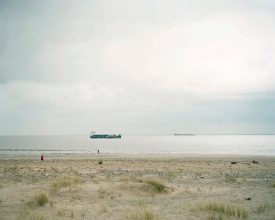
The Holderness coast located in the North East of England endures the highest rate of coastal erosion in Europe. The devastating consequence of this is the slow disappearance of villages and land into the sea. The Lost Villages project aims to explore the constant battle between the North Sea and the mainland, and to document the irreversible change taking place on the Holderness coast.
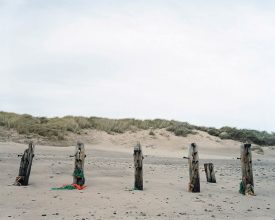
The speed of the erosion has increased significantly in the past decade thanks to rising sea levels, which is linked to climate change. It is estimated that up 32 villages dating back to the Roman times have already been lost to the sea. During World War II many outposts were built on this 61 km stretch of coastline. What remains of these outposts is now falling into the sea.
The historical events which took place on this coastline are fascinating. Since Roman times it is estimated that a strip of land three and a half miles wide has been washed into the North Sea. Two miles are estimated to have been lost since the Norman invasion in 1066 AD.
One lost village, Ravenser Odd, is particularly significant. Described as a mediaeval “new town” founded in 1235, it was also a thriving sea port. At the height of its fortunes in the early 14th century, Ravenser Odd was a town of national importance, regularly supplying the king with two fully equipped ships and armed men for his war with the Scots. Shakespeare’s Richard II also speaks of a town called Ravenspurg (Ravenser). By 1346 it was recorded that two-thirds of the town and its buildings had been lost to the sea due to erosion. In the years that followed from about 1349 to 1360, the sea had completely destroyed Ravenser Odd. It is the history of this particular village that has been an important inspiration for this project.
Today the village experiencing the most severe threat is Skipsea. With a population of around 600, many homes there are set to disappear completely in the next five years. The average annual rate of erosion is around two metres of land per year, or two million tonnes of material. Most of the land here is covered by glacial till, a soft boulder clay deposited over 18,000 years ago.
I have always been fascinated by changing natural environments. What drew me to this coastal area, though, is not just its reputation as one of the fastest eroding coastlines in Europe, but also because it is very close to where I grew up. When I was a child my parents would take me on day trips to this area, in particular a town called Withersea. Returning to this stretch of coastline as an adult after so many years helped bring back fond memories of playing on the beach, my grandparents close by, keeping an eye on me from their deck chairs.
Lost Villages will continue to document the erosion of the Holderness coastline and the difficulties experienced by its people, who are quite literally living on the edge there. In just over a year of working on this project, I have seen the coastline change markedly right before my eyes. This really does bring the speed of the erosion into reality.
Biography
Neil A White is an English-born photographer and teacher currently living in London. Growing up in the north of England, Neil would escape to the countryside whenever he could. This fascination with the natural world and contrasting environments is at the heart of his photography and an infinite source of inspiration. His work explores the relationship between nature and the modern world, and how they co-exist, sometimes harmoniously, more often in conflict with one another. He sees this conflict as one of the key dilemmas of modern day existence. When taking pictures of landscapes, he tries to connect with the land, feel the air, the light and bring those feelings into his photographs.
Neil received an MA in Photojournalism and Documentary Photography in 2006 from the University of the Arts in London, adding to his BSc in Engineering Management. Work from his Lost Villages series has been published in The Guardian Magazine and Geographical Magazine and was highly commended in The Environmental Photographer of the Year competition in 2011. His work has been shown in the UK and internationally and he is currently putting together his new series, When the wave comes from the mountain.