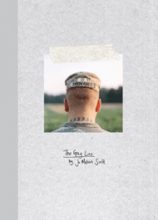
In 2003 the British public took to the streets to voice their opposition to the impending invasion of Iraq. The protests were a democratic unity that the presiding powers of the day were wilfully deaf and blind to. The messages carried on the shouted slogans and homemade banners sat in stark opposition to some of the attitudes filling the airwaves in the US. A great many voices called for lethal force against an enemy that had for too long been allowed to openly act as a rogue state. But, asks Jo Metson Scott in The Grey Line, what about the soldiers who were caught in this crossfire of attitudes? How does it feel to be a soldier taking part in a war that is so unpopular? And what happens when those same soldiers openly question the moral value of that war?
Taking a stand as a conscientious objector carries with it a surface notion of romanticism and integrity. However, as you navigate your way through the often painful stories collected within The Grey Line it becomes clear that occupying such a political mindset places you in a position that few of us would welcome: imprisonment, alienation and, in some of the more heartbreaking accounts, familial severance.
According to recent statistics, since 2003 around 400 members of the US forces have applied for conscientious objector status. Just a fraction of those servicemen saw their application granted. Perhaps most significantly around 20,000 soldiers have gone absent without leave.
20,000 is perhaps an unsurprising statistic considering the fact that the term ‘conscientious objector’ is one that many supporters of America’s war on terror have chosen to remove from their vocabulary. Instead it has been substituted for derogatory terms such as deserter and coward, and for many carries the implication that these objectors are unpatriotic traitors.
Within The Grey Line, British photographer Jo Metson Scott (who was awarded a grant in September 2012 from Firecracker for this project) photographs and talks to a small section of the growing number of men and women in the US whose moral objection to the war forced them into direct opposition with the orders they were expected to follow unquestioningly. Interestingly, the photographer only found one British soldier willing to speak. For these young soldiers the instinct for survival within their communities (in both society and family) has been overridden by a sense of overwhelming guilt and a desire to speak out. This guilt is not always born from witnessing and partaking in direct conflict, yet the pangs of conscience remain the same.
The Grey Line is a narrative journey in many ways. The book essentially acts as a log of Jo Metson Scott’s travels throughout the US collecting stories, words, moments, letters and thoughts. Each person she met gave her the name of another and so her journey continued through state after state. Not all of the people she met went AWOL or applied for conscientious objector status; some fulfilled their contractual obligations. Yet all of them have, on some level, faced ridicule and derision due to their open objections to the invasion of Iraq and the war on terror.
Some of the stories are disturbing. One young man called Ryan relates how his brother publicly disowned him on Facebook after Ryan spoke about his experiences at an Iraq Veterans Against the War event in 2009. Another US soldier called Robert was reported to the FBI by his own sister after going AWOL. Robert eventually handed himself in and was imprisoned for seven months.
Jo Metson Scott’s book is a curious physical object. It looks and feels almost like a scrapbook. We are presented with portraits, all of which seem to have been taken during moments of silent reflection. Each one offers moments of strength and fragility in equal measure. The muted colours and hazy natural light offer a sense of these people somehow adrift in a nether region.
The portraits are presented beside transcripts, letters and emails; inclusions that help to instil a desire within the viewer to revisit each portrait with a fresher understanding each time. The title of the work is apt: it’s one that perfectly conveys the difficult terrain that each sitter had to navigate their way across during their moral negotiations.
Much like the Gulf War of the early 1990s, the war on terror is a conflict that can still find itself subject to strict media censorship. The Grey Line is a document that bypasses mandated reportage and functions independently to give a voice to an underground and often unheard community; in this case a community of dissenters.